


Foundation Studies and AI in Creative Education
- Raffles Kuala Lumpur

- Oct 7, 2025
- 2 min read
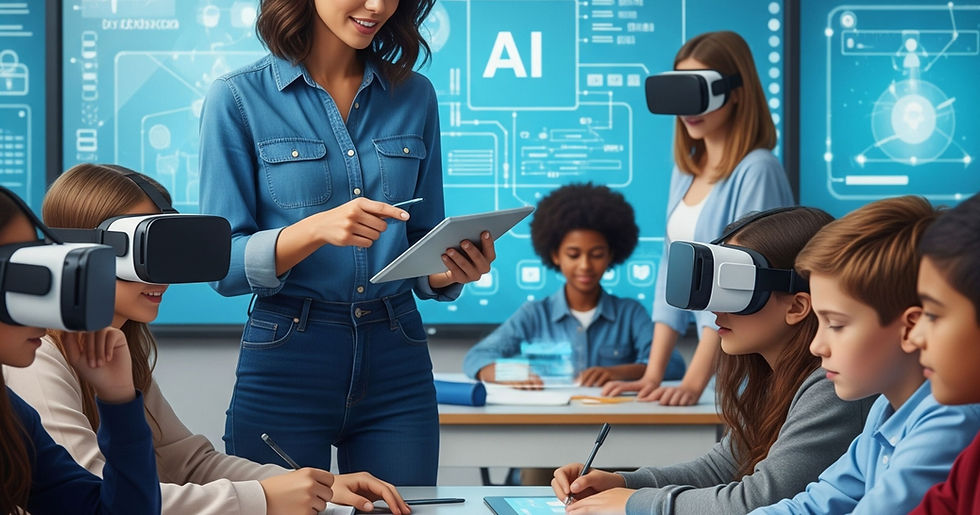
Building an extraordinary, creative career begins with a solid foundation. Just as a building can have no being without a ground to stand on, no designer or artist can progress without a comprehension of colour, form, composition, sketching, and observation. These are not just exercises, but the global language of creativity. They inspire and guide, shaping the raw potential of creativity into meaningful and purposeful expressions.
But the world is moving faster than it used to. Artificial Intelligence (AI) is revolutionising what you can do as an artist or designer in the most creative industries today. AI doesn't just inspire creativity, it accelerates it. It unlocks opportunities that were previously inaccessible, enabling faster experimentation and more efficient scaling of ideas. However, the expression of pure creativity cannot be defined solely by these tools. All of the clever technology in the world generates labor without soul if it is not rooted in observation, analysis, and aim. Only the individual's depth of insight, combined with fundamental skills, lends technology purpose.
But one would be mistaken to think that foundation studies extend only to old-fashioned, established methods. Foundational learning is further strengthened when combined with AI, allowing students to achieve more in less time. However, they could utilize AI to quickly test, refine, and scale their ideas more efficiently than through sheer repetition, which would be more engaging and motivating. The AI provides the speed; the foundation provides the base. Together, they equip students to be not just responsive to but leaders of change. It's essential, however, to consider the ethical implications of AI in creative education, ensuring that it is used responsibly and in ways that enhance, rather than detract from, the human experience of art and design.
Just as critical, foundation studies not only build character but also develop skills. They also build resilience, a tolerance for frustration and critical thinking, capacities that, even in an age of 'smart' and 'sentient' technology, are anything but irrelevant. In fact, they are more critical than ever. Though it's not fanatically moralistic, AI effectively becomes an ally when it serves these principles, augmenting rather than supplanting human creativity. It's only by understanding and mastering these complementary worlds that we will remain relevant in our careers and the broader job market. Youth who are fluent in modern tools and time-tested art concepts will be better prepared to adjust, create, and succeed.
The wheel of progress never ceases turning. Art should be able to keep pace with science and technology, should be in step with history. Bottom-up AI-powered education is not an obstacle, but rather a gateway to the future of creativity. It affords the next generation of designers and artists to take history and fearlessly run into the future, where novelty, in all its authenticity, is dared.
Joseph Yap | Certificate In Design Programme Coordinator | Raffles Kuala Lumpur

