


AI-FIRST CREATIVITY
- Raffles Jakarta

- Jan 26
- 5 min read
The next era of fashion design is happening not in traditional studios but at the intersection of human creativity and machine intelligence. Designers are starting to think, make, and generate new ideas with AI at a speed once impossible. Trend analysis, fabric experimentation, silhouette exploration, color forecasting, and prototyping that used to take weeks can now be done in hours or even minutes.

The AI-first creativity doesn't replace the designer; it enhances collaboration, making them feel valued and confident in their evolving role. It pushes the limits of what we can imagine, accelerates idea generation, and enables brands to create collections that are faster, smarter, and deeply personal. The designer of 2026 works with algorithms to unlock new artistic and business opportunities.
The New Partnership
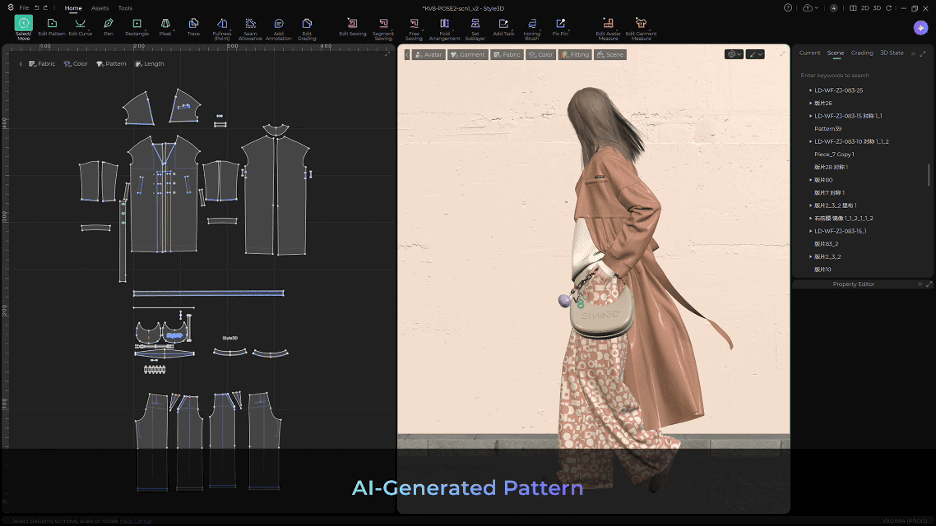
AI-first creativity comes from a collaboration between intuition and machine logic. The designer has good taste, emotional intelligence, storytelling ability, and an understanding of other cultures. The AI can process data quickly, recognize patterns, and remember things. Together, they create a system that generates more ideas, which are also more helpful.
Adobe Firefly, CLO 3D, DALL·E, Midjourney, Fashable, and Revery AI are now standard tools designers use regularly. They help visualize silhouettes, test prints, simulate fabrics, refine patterns, and create evolving moodboards. These tools support endless iteration, allowing designers to explore hundreds of options and select the most authentic and high-quality designs, ensuring that AI enhances rather than compromises craftsmanship.
This higher level of creativity doesn’t cause chaos; it brings clarity.
Designing with Data: From Gut Feeling to Smart Thinking
Designers have always been good at predicting cultural trends. But AI gives us a new way to look at things: quantitative creativity. Machine learning models analyze billions of data points, including search trends, social conversations, visual patterns, and buying habits, to uncover new trends with remarkable accuracy. Nike, Zara, H&M, and Shein are just a few of the brands that already use predictive analytics to figure out what customers will want next.
Luxury brands like Prada, Gucci, and Burberry, on the other hand, use sentiment analysis and image recognition systems to understand how people feel about specific designs. The result is not "data designing fashion," but data that enhances the designer's sense of style. AI helps people be creative without telling them what to do.
Hyper-Personalization: The Next Big Thing in Creativity
Personalization is the most critical part of AI-first creativity. For a long time, fashion has depended on the popularity of many people. Now, designers can create collections that are perfect for small groups and even for one person.
AI systems learn from data such as body data, style preferences, purchase history, and even people's feelings. They can suggest silhouettes that look good on certain body types, create color palettes tailored to your personal style, or design capsule pieces for small cultural groups.
Companies like Levi's, Stitch Fix, and Adidas are experimenting with algorithm-based personalization. At the same time, digital fashion pioneers like DressX, The Fabricant, and Reblika create hyper-personal digital clothes tailored to the wearer's digital identity.
The designer's job has changed from making things to putting together personalized visual worlds.
Using AI to Explore Materials
AI is transforming how new textiles are made, opening up limitless experimentation. Designers can now see how drape, sheen, or elasticity will look instantly, making fabric exploration more exciting and accessible. This innovation fosters a sense of possibility and responsibility, encouraging designers to push boundaries while caring for the environment.
This mix of creativity and computational materials science enables innovation and responsibility.
Speeding Up the Process of Going from Sketch to Sample
There is a quiet revolution going on in the technical side of design. 3D modeling and AI-enhanced patternmaking significantly reduce the time to sample. A designer can make dozens of different versions, test them out in a virtual world, and only make the best one in real life. Digital twins, 3D lookbooks, and AI-enhanced workflows are already being used by high-end brands like Balenciaga, Louis Vuitton, and Dior to accelerate the creation of collections. Speed is a strategic advantage, but it shouldn't come at the expense of quality. The workshop of the future will be part physical and part digital, with needles and threads next to neural networks.
AI Does Not Replace Creativity; It Expands It
People who fear that AI will take over design often overlook what truly defines creativity. AI can't grasp subtext, cultural nuance, or real-life experiences that inspire fashion. It lacks the dream, desire, and rebellious spirit elements essential to authentic design. Human intuition and cultural insight remain irreplaceable, with AI serving as a supportive partner in the creative journey.

AI helps designers see more of the world by removing obstacles, speeding up iteration, and clarifying ideas. It broadens their perspective without replacing their creative voice. Designers remain the storytellers and the heart of the process, which should reassure the audience about their essential role.
AI is not a replacement; it is a partner.
Final Thoughts
AI-first creativity is changing the fashion industry from the inside out. It lets designers work faster, think bigger, and create designs that are deeper than ever before. Creativity is no longer one-dimensional; it is now multi-dimensional, with human intuition and machine intelligence working together. The most cutting-edge fashion brands in 2026 and beyond will be those that see AI as a creative partner rather than just a tool. AI will help them come up with new ideas, improve their skills, and make collections that are more personal than ever before.
Arman POUREISA
Marketing Manager
References
Adobe. (2025). Firefly generative AI for designers. https://www.adobe.com
Adidas. (2024). AI-powered product creation and personalization. https://www.adidas-group.com
Balenciaga. (2024). Digital prototyping and creative systems. https://www.balenciaga.com
Burberry. (2025). AI-enhanced design and retail innovation. https://www.burberryplc.com
CLO Virtual Fashion. (2025). 3D garment simulation technology. https://www.clo3d.com
DALL·E by OpenAI. (2025). Generative AI for creative industries. https://openai.com
DressX. (2024). Digital fashion and virtual wardrobes. https://www.dressx.com
Farfetch. (2024). AI-driven style recommendations. https://www.farfetch.com
Gucci. (2025). Digital creativity and AI innovation. https://www.gucci.com
H&M Group. (2025). AI-assisted product development. https://hmgroup.com
Levi Strauss & Co. (2024). Personalization and digital design tools. https://www.levistrauss.com
Louis Vuitton. (2025). Digital fashion prototyping. https://www.louisvuitton.com
Midjourney. (2025). Creative exploration with AI models. https://www.midjourney.com
Nike. (2024). Predictive analytics in design. https://www.nike.com
Revery AI. (2025). AI-powered fashion visuals. https://www.revery.ai
Shein. (2025). Real-time trend prediction systems. https://www.shein.com
Vogue Business. (2025). AI and the future of creative direction. https://www.voguebusiness.com


