


Circular Fashion and the Manteco Model: How Recycled Wool Points to the Future of Sustainable Design

Updated: Sep 18
Raffles Jakarta hosted a collaborative industry session with Manteco, the Italian pioneer of circular wool, rather than a guest lecture about a distant European mill. It exposed its students to a viable solution to the single largest environmental problem in fashion, as well as a business model that turned this problem into an advantage.
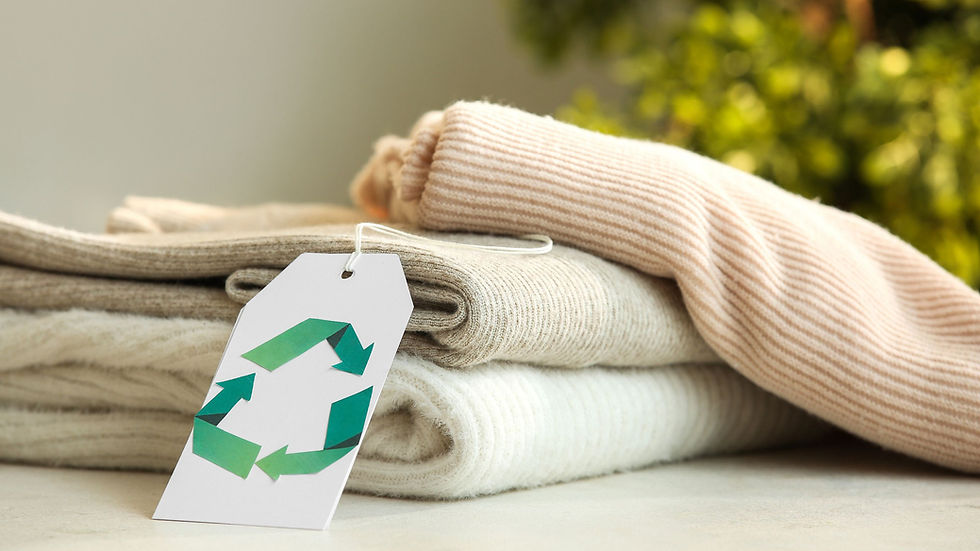
The fashion industry is one of the most wasteful, sustainable, and polluting on the planet, and the path forward, guided by science, regulation, and consumer expectations, points firmly toward a different system. The system has a name. It's circular fashion, and Manteco's recycled wool is one of the clearest examples of it anywhere in the world.
This article begins with the Raffles and Manteco collaboration to explain what circular fashion is, why a small wool mill in Tuscany has become a reference point for the entire industry, and why the issue matters so much in Indonesia, a country that is both one of the world's largest textile producers and the site of one of its most notorious textile pollution crises.
The argument is simple. For the next generation of designers, circular thinking is no longer an optional ethical feature. It's quickly becoming the cost of doing business.
What Is Circular Fashion, and Why It Matters Now
To understand circular fashion, it's helpful to identify the system it replaces. The traditional fashion economy operates on a make, use, and discard model, in which raw materials are transformed into garments that are worn only a few times before being discarded. The scale of the waste produced is difficult to comprehend.
According to the landmark study by the Ellen MacArthur Foundation, the equivalent of one trash truck of textiles is landfilled or burned every second, an estimated $500 billion in value is lost each year due to clothing that is barely worn and rarely recycled, and only about one percent of the material used to make clothing is recycled back into new clothing.
The same study discovered that greenhouse gas emissions from textile production, at around 1.2 billion tons per year, exceed those of all international flights and maritime shipping combined and warned that if the industry continues on its current path, it will consume a quarter of the world's carbon budget by 2050.
The harm extends beyond the atmosphere. Every year, washing clothes releases approximately half a million tons of microfibers into the ocean, a flow of plastic that is virtually impossible to recover once in the water (Ellen MacArthur Foundation, 2017).
Circular fashion is a deliberate alternative to linear waste. Built on circular economy principles, it is based on three design-driven ideas: eliminate waste and pollution, keep products and materials in use, and regenerate natural systems rather than deplete them. In practice, such an approach means garments that can be repaired, resold, and eventually recycled, as well as materials that can be repurposed rather than ending up in a landfill.
It is a systemic shift rather than a single product feature, and its significance is no longer debated on the basis of evidence. The debate has moved on to a more difficult question: how do you actually build it? This is where a company like Manteco comes in, as it has been quietly building it for the past eight decades.
The Manteco Model: Recycled Wool as a Blueprint
Manteco is a wool mill in Montemurlo, in Tuscany's Prato textile district, which Enzo Anacleto Mantellassi founded in 1943. He began by collecting discarded military blankets and garments and giving them a second life. That origin is not some quaint historical detail. It is the entire philosophy.
Prato has been recycling wool since the 1850s, and Manteco has spent over eight decades perfecting the craft into an industrial system on which top fashion houses now rely (Manteco, n.d.). Its flagship material, MWool, is a next-generation recycled wool that embodies circular design.
The process is elegantly simple in principle but difficult to execute. Manteco collects wool waste, including factory offcuts and discarded garments, and meticulously sorts it by color and composition before cleaning and shredding it back into fiber using a low-impact mechanical method that preserves the wool's quality.
This distinction is more important than it may seem. Most so-called textile recycling is actually downcycling, in which fibers are shredded into low-value stuffing, insulation, or industrial rags before leaving the fashion system permanently.
Manteco's achievement is to keep recycled wool at the forefront of the clothing industry, closing the loop at the top rather than the bottom. These fibers are then blended and spun into a new yarn that is as strong and luxurious as virgin wool. The most striking feature is what the process excludes.
Because reclaimed wool already has the colors it was dyed in a previous life, Manteco creates new shades by blending fibers of different tones into what it calls recipes, an artisanal color system known as Recype that has produced over a thousand colors without using a single dye (Circle Economy Foundation, 2022; Manteco, n.d.).
The entire operation is run through a local network of over fifty specialist businesses located within a few miles of the mill, resulting in a short and traceable supply chain that keeps value in the region.
The environmental outcome is not a marketing claim, but rather a measured and independently verified fact. MWool was the first recycled wool to have its life cycle assessment published as a peer-reviewed scientific study and registered as an environmental product declaration.
Compared to generic virgin wool, it has a 99.2 percent lower impact on climate change, a 99.9 percent reduction in water use, and a 93.3 percent decrease in energy consumption (WWD, 2026; EPD International, 2022). The finished fabric is a natural fiber that is biodegradable and, when not treated with chemicals, has been shown to decompose in approximately 140 days (PlasticFree, n.d.).
In 2024, the Textile Exchange named the model its Climate Project of the Year. Manteco demonstrates, in short, that circular fashion at a luxury level is not a compromise. It's simply a better way to make fabric.
The Chemistry Problem, and Why the Citarum Makes This Local
The absence of dyeing is the detail in the Manteco model that an Indonesian reader is most likely to overlook. Dyeing and finishing fabric is one of the most chemical-intensive and water-polluting stages of traditional textile manufacturing, and the cost of that stage is most visible in West Java.
The Citarum River, which provides much of the water used by Jakarta and the surrounding region and supports millions of people, has become one of the world's most polluted rivers, with environmental groups attributing a large share of that pollution, up to 68 percent on the upper river, to the hundreds of textile factories along its banks (WWD Sourcing Journal, 2026; United Nations Development Program, n.d.). The dyes and chemicals that give conventional fabric its color literally change the color of water.
The matter is significant for Indonesia, as textiles are a significant industry. The country is one of the world's top ten textile and apparel producers, with exports in the billions of dollars and a workforce of approximately three million people, indicating that the sector is both an economic pillar and an environmental liability (Undark, 2017).
When viewed against this backdrop, the Manteco model appears to be a direct response to Indonesia's signature textile crisis rather than a European curiosity. A process that produces color without using dyes, uses almost no water, and keeps wool in circulation rather than sending it downstream is precisely the kind of thinking that the Citarum watershed requires.
Teaching circular fashion at a Jakarta design school is thus more than just an abstract exercise in global citizenship. It is an engagement with a problem that runs through the city's water supply.
Why Circular Fashion Is Becoming Mandatory, Not Optional
For much of the last decade, brands that care have pursued sustainability in fashion as a matter of conscience. That era is coming to an end, and the reason is regulation. The European Union, which receives a large portion of the world's apparel, has implemented a strategy for sustainable and circular textiles that is transforming voluntary good intentions into binding law (European Commission, n.d. Textiles sold in the European market must comply with Ecodesign for Sustainable Products Regulation requirements for durability, recycled content, and recyclability.
A Digital Product Passport will require garments to include a verifiable record of their composition and environmental performance. Extended Producer Responsibility schemes will require producers to pay for the collection and recycling of what they put on the market, while the destruction of unsold stock will be restricted (European Commission, n.d.).
The key point for a country like Indonesia is that these rules apply across borders. Because the vast majority of clothing in Europe is imported, any manufacturer or brand wishing to sell into that market, regardless of location, must demonstrate the sustainability and circularity of their products rather than simply assert it.
Recycled content, traceable supply chains, and recyclable design are shifting from competitive advantages to market access requirements. In that world, the capabilities that Manteco has spent eighty years developing, such as a documented low-impact process, a circular material with a verified life cycle assessment, and full traceability, are no longer just idealistic but instead become a commercial advantage.
Circular fashion is becoming the standard, and the designers and businesses that recognize it first will be the ones left standing when that standard arrives.
What This Means for Fashion Education at Raffles Jakarta
This is the context that gives the Raffles Jakarta-Manteco collaboration real weight. The session accomplishes something that a textbook cannot: it allows the next generation of designers to handle a truly circular material and understand the craft, chemistry, and economics that go into it.
That exposure is important because the skills required for circular fashion are more than just creative. They include material literacy, knowledge of life cycle assessment, the ability to design a garment that can be disassembled and recycled, and the commercial acumen to explain why any of these skills is worthwhile. These are the skills that the fashion programs at Raffles Jakarta, an international design and business school on Jalan M.H. Thamrin, are designed to foster.
The Fashion Design program teaches students to view material selection and construction as design decisions with consequences, whereas the Fashion Marketing and Management program prepares them to create and sell the circular business models that a regulated market will increasingly require (Raffles Jakarta, n.d.a; Raffles Jakarta, n.d.b). The goal is not to produce designers who add sustainability to their work as an afterthought but rather designers who are accustomed to circular thinking and reach for recycled fiber and recyclable construction as naturally as they do for a color.
A session with a company like Manteco is where that instinct takes shape, when a student realizes that the most advanced material in the room was once someone's discarded coat.
Conclusion
Manteco's story exemplifies the need for circular fashion because it rejects the false choice between responsibility and quality. A mill that started by rescuing old military blankets now supplies luxury homes with wool that is a fraction of the environmental cost of the virgin fiber it replaces, is dye-free, and can be traced from waste to garment.
For Indonesia, where a large textile industry and a severely polluted river coexist, that model is not a distant ideal but a practical path forward. And for the students who met Manteco at Raffles Jakarta, it is a preview of the profession into which they will soon enter, one in which the designers learn early on to see waste as a beginning rather than an end. Circular fashion no longer represents the future of sustainable design. It is quickly becoming the present, and the only question is who will be prepared for it.
FREQUENTLY ASKED QUESTIONS
What is circular fashion? Circular fashion is an approach to designing, making, and using clothing that eliminates waste and keeps materials in use for as long as possible. It replaces the linear model of make, use, and discard with garments designed to last, to be repaired and resold, and ultimately to be recycled back into new products rather than sent to landfill.
What is Manteco, and why is it important? Manteco is an Italian wool mill founded in 1943 in the Prato textile district of Tuscany, and it is a global reference point for circular textiles. Its recycled wool, MWool, is made mechanically from discarded wool without chemicals or dyes, and its verified life cycle assessment shows a 99.2 percent lower impact on climate change than virgin wool.
How does Manteco make colored wool without dyes? Manteco creates color through a system called "Recype," which blends recycled wool fibers that were already dyed in their previous life into new shades. By mixing fibers of different tones according to archived recipes, the company has produced more than a thousand colors without adding any new dyes or chemicals.
Why does circular fashion matter for Indonesia? Indonesia is among the world's largest textile producers, and conventional dyeing has made the Citarum River, a major water source for Jakarta and its region, one of the most polluted in the world. Circular methods that avoid dyeing and drastically cut water use offer a direct response to that pollution while protecting an economically vital industry.
Is circular fashion becoming a legal requirement? Yes, increasingly so. The European Union is introducing binding rules on textile durability, recycled content, digital product passports, and producer responsibility, and because most European clothing is imported, producers everywhere, including in Indonesia, will need to prove the circularity of their products to keep selling in that market.
How does this issue connect to studying fashion at Raffles Jakarta? Raffles Jakarta connects students directly with industry practice, as in its collaborative session with Manteco, so they learn circular design as a working skill rather than a theory. The fashion design and fashion marketing and management programs develop the material knowledge and commercial understanding that a circular and regulated industry now demands.
Marketing Manager
References
Circle Economy Foundation. (2022, August 29). Manteco: Recycling textiles without the use of dyes. Knowledge Hub. https://knowledge-hub.circle-economy.com/article/19711
Ellen MacArthur Foundation. (2017). A new textiles economy: Redesigning fashion's future. https://www.ellenmacarthurfoundation.org/news/one-garbage-truck-of-textiles-wasted-every-second-report-creates-vision-for-change
EPD International. (2022). MWool: Environmental Product Declaration (EPD-IES-0005830). https://www.environdec.com/library/epd5830
European Commission. (n.d.). EU strategy for sustainable and circular textiles. https://environment.ec.europa.eu/strategy/textiles-strategy_en
Geneva Environment Network. (2024). Environmental sustainability in the fashion industry. https://www.genevaenvironmentnetwork.org/resources/updates/sustainable-fashion/
Manteco. (n.d.). MWool. https://manteco.com/mwool/
plastic-free. (n.d.). Manteco. https://plasticfree.com/makers/manteco
plastic-free. (n.d.). MWool. https://plasticfree.com/materials/mwool
Raffles Jakarta. (n.d.a). Fashion Design. https://www.raffles-indonesia.com/fashion-design-page
Raffles Jakarta. (n.d.b). Fashion Marketing and Management. https://www.raffles-indonesia.com/fashion-marketing-management
Raffles Jakarta. (n.d.c). Raffles Jakarta x Manteco. https://www.raffles-indonesia.com/raffles-x-manteco
Undark. (2017, February 23). The environmental scourge of Indonesia's textile boom. https://undark.org/2017/02/23/indonesia-textiles-citarum-river-pollution-2/
United Nations Development Programme. (n.d.). A river runs through it: How responsible business practices can clean up Indonesia's waterways. https://www.undp.org/indonesia/blog/river-runs-through-it-how-responsible-business-practices-can-clean-indonesias-waterways
WWD. (2026, April 10). Casa Manteco: Where heritage, sustainability and innovative wool practices merge. https://wwd.com/fashion-news/textiles/casa-manteco-sustainable-wool-innovation-tuscany-1238903094/
WWD Sourcing Journal. (2026). Textile factories contaminate Indonesia's Citarum River. https://wwd.com/sourcing-journal/industry-news/textile-factories-contaminate-indonesias-citarum-river-1238696897/


