


Is January a Good Time to Start University?

Most Indonesian families regard the academic calendar as fixed. School ends around the middle of the year, and university begins in August, so anyone who misses that window assumes they must wait a full year for the next opportunity. That assumption costs many young people a year of their lives that they never should have lost.
There are numerous good reasons to start a degree in January, and for some students, it is actually the best option. This blog discusses who benefits the most from a January start, what to consider before making a decision, and how to make the first few months count.
Why the “wrong” time is often the right time
The notion that there is only one appropriate time to begin higher education stems from tradition, not from how people learn. A student's readiness does not adhere to a calendar.
Some students graduate high school in June, full of energy and eager to begin university immediately. Others leave exhausted, unsure of their goals, or still awaiting results, documents, or a family decision. For the second group, being pushed into an August start date frequently means having to choose a program quickly.
Being told to wait until the following August frequently results in a long, unstructured year that saps motivation. A January start fits nicely between the two. It allows students a few months to rest, reflect, and prepare without losing an entire year.
Why more students now start university in January
Flexible intakes have grown in popularity in international education over the last decade, for practical reasons.
Some students need a short pause. After twelve years of school, a few months to travel, work, volunteer, or simply recover can make the difference between a student who drifts through the first year and one who arrives ready.
Some students change their minds. It is very common to begin a program in August and realize within a semester that it is not the right fit. A January intake means that a student can switch direction without losing a full year.
Some students are waiting on paperwork. Final results, certificates, translations, and visas do not always arrive on time. A January intake removes the pressure of a single deadline.
Some students are not fresh school leavers at all. Young professionals, career changers, and people returning to study after a break often find that January fits more naturally around work and family commitments.
Some families simply plan better with more time. A few extra months allow parents and students to compare options carefully, visit campuses, and plan finances properly, instead of deciding under pressure.
The real advantage: you do not lose a year.
The most compelling reason for a January start is time. Every year spent waiting means a year later in a career, a year later in earning, and a year longer for a student's momentum to continue. This is why a program's structure is equally important as its start date.
Raffles Jakarta's studies follow a fast-track model, with four intakes per year: January, April, July, and October. Students are not restricted to a single annual calendar, and the intensive structure enables them to complete their studies more quickly than under a traditional timetable. The same level of flexibility is available on the other end.
Because graduates finish their studies at different times throughout the year, they can enter the job market at any time rather than competing against every other graduate in the country in the same few weeks. A January student did not fall behind. They simply keep a different, and often less crowded, schedule.
What a good January start should feel like
Starting in the middle of a traditional academic year raises an understandable concern: will a January student feel like an outsider? In a school with multiple enrollments, the answer should be no. Teaching, timetables, and student support are all designed to accommodate students who arrive at different times, so a January cohort is the norm rather than the exception.
The first few weeks should be spent settling in, learning how to evaluate studio and classroom work, and building relationships with instructors and classmates. The quality of these relationships is paramount. Industry experts provide valuable feedback in creative and business education. Students at Raffles Jakarta learn from International Creative Practitioners, who include designers, strategists, and business leaders from Raffles Milano, Raffles University, and the Raffles Network. The teaching standard remains constant, regardless of the start date.
Choosing the right program before you begin
The months leading up to a January start date represent a valuable opportunity, and the best way to capitalize on them is to make an informed program decision. Many students arrive knowing they want to do something creative or business-related but are unsure what.
Fashion students may struggle to decide between Fashion Design and Fashion Marketing & Management. Visual thinkers may relate Visual Communication Design to Digital Media Design or Interior Design. Others are interested in business administration, artificial intelligence, and psychology. A few straightforward questions can help narrow down the possibilities.
What type of work makes you lose track of time?
Do you prefer to create, organize, or understand others?
What do you hope to be doing in five years, and what does a typical working day look like in that position?
If you're still unsure, the Find Your Path page and one-on-one consultations can help clarify your preferences.
Thinking beyond the first semester
The start university date is only the beginning. The more important question is where the program will go. Before committing to a school, think about how it connects students to industry while they are still studying. Raffles Career Development works with the Center of Professional Development to provide students with industry projects, attachments, and career guidance before they graduate. Students can study at a global network of 16 institutions in nine countries, with an intercampus transfer pathway described on the Our Worldwide Campuses webpage.
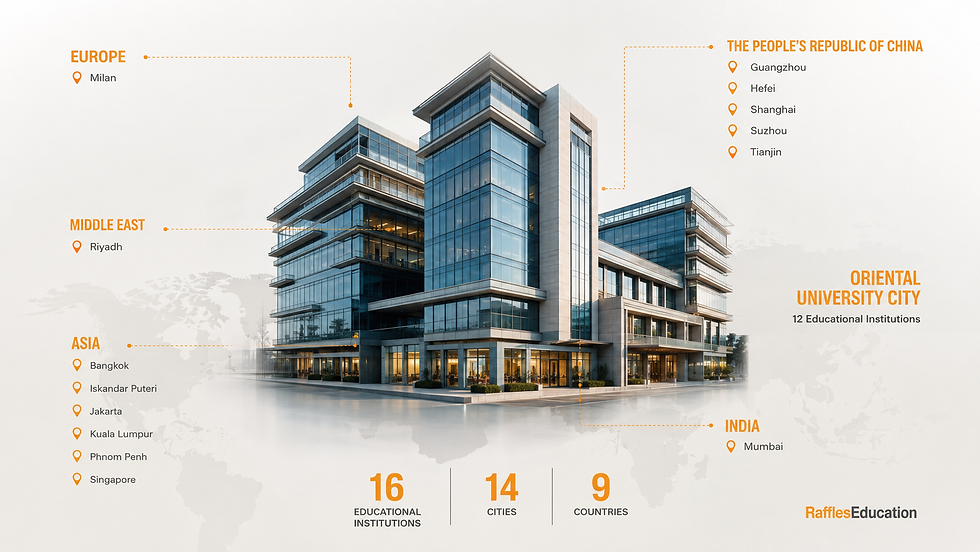
The Alumni Success Story page features graduates who have won international fashion awards, held executive positions at major corporations, and launched their own businesses. Every one of them started somewhere, and the starting date was the least important part of the story.
A simple checklist for a January start
If you are considering beginning your degree in January, these steps will make the transition smoother:
Confirm your program early. Use the months beforehand to research, ask questions, and settle on a direction.
Prepare your documents. Gather school results, identification, and any portfolio material the program may ask for.
Look into financial support. Scholarships can change what is possible, so check eligibility well before the intake begins.
Use the waiting time well. Read, sketch, build a small portfolio, take a short course, or gain some work experience. Arriving with even a little practice makes the first semester easier.
Talk to the school. A conversation with an admissions advisor will answer questions that no brochure can.
So, is January a good time?
For many students, the answer is positive. A January start allows you to rest and prepare without losing a year, the opportunity to change a course that did not work for you, and the freedom to start when you are truly ready rather than when the calendar dictates.
What matters far more than the month is the quality of the education that follows: the mentors, industry connections, network, and opportunities that a school provides.
Intake in January 2027 is now open.
Applications are now open for the January 2027 intake at Raffles Jakarta, across programs in fashion, design, business, technology and AI, and social science. If you are ready to begin or simply want to explore your options, here is where to start:
You do not have to wait until next August. Your next chapter can begin this January.
Does Raffles Jakarta accept students in January? Yes. Raffles Jakarta has four intakes per year: January, April, July, and October, with the January 2027 intake currently open.
Will January students fall behind students who began in August? No. Programs are designed for multiple intakes, so January students begin with a complete program structure.
Which programs are available for the January intake? Raffles Jakarta offers programs in fashion, design, business, technology, artificial intelligence, and psychology. The admissions team can confirm the availability of each program.
Can I apply for a scholarship if I begin in January? Scholarships worth up to 100% are available. During the consultation, you can discuss eligibility details with the admissions team.
What if I am not sure which program to choose? The Find Your Path page, as well as one-on-one consultations, are intended to help students make informed decisions before enrolling.
How do I apply? Follow the instructions on the How To Apply page, or book a consultation using the inquiry form to speak with an advisor directly.
Marketing Head


