The Future of Material Circularity

The worldwide fashion sector is accountable for around ten percent of yearly global carbon emissions, a significant portion of which arises from the extraction and processing of new raw materials (Ellen MacArthur Foundation, 2024).

As the industry progresses toward ambitious climate objectives, the idea of material circularity has transformed from a specialized environmental aim into a stringent technical field.
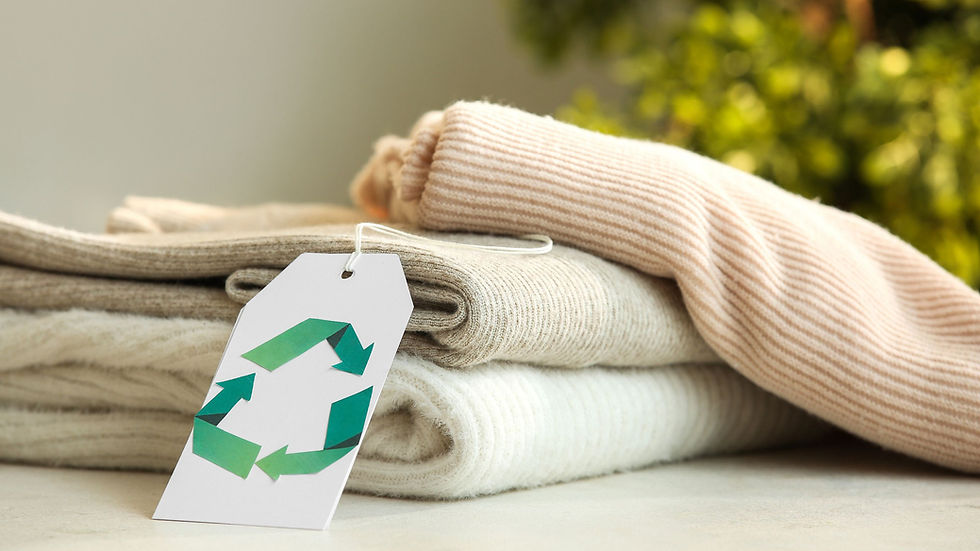
The collaboration between Raffles Jakarta and Manteco is exemplified by the utilization of high-quality recycled wool, a substance that connects industrial waste management with superior design quality.
The Technical Imperative of Material Circularity
Material circularity refers to a regenerative framework that minimizes resource input, waste, emissions, and energy loss by decelerating, sealing, and constricting material and energy cycles (Geissdoerfer et al., 2017).
In contrast to conventional linear models that adhere to a take-make-dispose paradigm, circularity necessitates that designers comprehend the molecular and mechanical characteristics of recycled fibers. Manteco, a worldwide frontrunner in circular textiles, utilizes a mechanical recycling method that circumvents the necessity for virgin chemicals.
By selecting, purifying, and amalgamating post-consumer and post-industrial textile refuse, Manteco attains a fiber quality that competes with that of virgin wool. Empirical evidence substantiates that this method diminishes water usage by 95 percent and energy expenditure by 90 percent relative to the manufacturing of new wool (Manteco, 2026).
For design scholars, these statistics illustrate the contemporary manufacturing landscape, wherein the paramount asset is not the innovation of the material, but rather the efficacy of its life cycle.
Integrating Circularity into Design Pedagogy
The incorporation of Manteco textiles into the curriculum at Raffles Jakarta signifies a shift in design education from creative conjecture to practical science. In conventional studios, design and the prediction of esthetic trends frequently receive emphasis. In circular studios, the design methodology initiates with material awareness.
1. Mechanical Properties and Durability
Students need to understand that recycled wool fibers possess distinct mechanical characteristics compared to virgin fibers. Due to the reduction in fiber length during recycling, designers must comprehend how to amalgamate these fibers with superior carriers to preserve tensile strength and drapability. This necessitates a more profound comprehension of fiber physics than what is conventionally imparted in typical fashion design curricula.
2. Design for Disassembly
The evolution of fashion education requires a transition toward design for disassembly. This entails designing apparel with elements that can be effortlessly disassembled upon reaching the end of their functional lifespan. Utilizing Manteco recycled wool, students are taught to emphasize mono-material compositions, thereby guaranteeing that the garment can serve as the raw material for future recycled textiles.
3. Supply Chain Transparency and Ethics
True material circularity relies on supply chain visibility. Through the partnership with Manteco, students gain access to technical data sheets that track the provenance of fibers. This transparency is critical for complying with emerging global regulations, such as the European Union Strategy for Sustainable and Circular Textiles, which mandates higher standards for product durability and recyclability (European Commission, 2023).
Data-Driven Sustainability in the Luxury Sector
The worth of recycled wool transcends simple ecological measurements. Consumers seeking authentic sustainability certifications progressively influence the luxury sector.
A recent analysis conducted by McKinsey and Company (2025) indicates that items with verified circularity assertions can achieve a price elevation of as much as 15 percent in significant global markets.
This trend presents a considerable career prospect for alumni of Raffles Jakarta. Through the mastery of circular material intricacies, designers transform into architects of an innovative economic framework. They are not simply choosing textiles based on tactile sensation; they are executing strategic choices that significantly influence the carbon footprint of their ultimate collections.
Modern designers set themselves apart from those of the past by expressing the ecological advantages of recycled wool through validated life cycle assessment data.
Cultivating the Next Generation of Circular Designers
The partnership between Raffles Jakarta and Manteco offers students the exceptional chance to engage with industrial-grade recycled wool within an educational setting. This experience is revolutionary, as it eliminates the conceptual nature of sustainability.
When a student engages with a piece of Manteco recycled wool, they are participating in a groundbreaking approach to the worldwide waste dilemma.
Educational establishments that neglect to incorporate circularity into their foundational designs jeopardize the readiness of their graduates for the regulatory and economic challenges of the forthcoming decade.
At Raffles Jakarta, our dedication to this collaboration guarantees that our students excel in material literacy. They discover that the paramount indulgence in contemporary design is the capacity to generate esthetic appeal while safeguarding the planet's future.
As the sector approaches the 2030 objectives set by the Fashion Industry Charter for Climate Action, expertise in manipulating, designing, and certifying circular materials will be the most important requirement for professional success in fashion.
Marketing Manager
READ MORE


References
Ellen MacArthur Foundation. (2024). A new textiles economy: Redesigning fashion’s future. https://emf.thirdlight.com/link/8g6t72
European Commission. (2023). EU strategy for sustainable and circular textiles. https://environment.ec.europa.eu/topics/circular-economy/eu-strategy-sustainable-and-circular-textiles_en
Geissdoerfer, M., Savaget, P., Bocken, N. M. P., & Hultink, E. J. (2017). The circular economy: A new sustainability paradigm? Journal of Cleaner Production, 143, 757–768. https://doi.org/10.1016/j.jclepro.2016.12.048
Manteco. (2026). The environmental impact of mechanical wool recycling. Technical Report. https://manteco.com/sustainability
McKinsey and Company. (2025). The state of fashion 2025: Navigating the circular transition. https://www.mckinsey.com/industries/retail/our-insights/state-of-fashion